Cybersecurity management systems, UN R.155 and ISO/SAE 21434
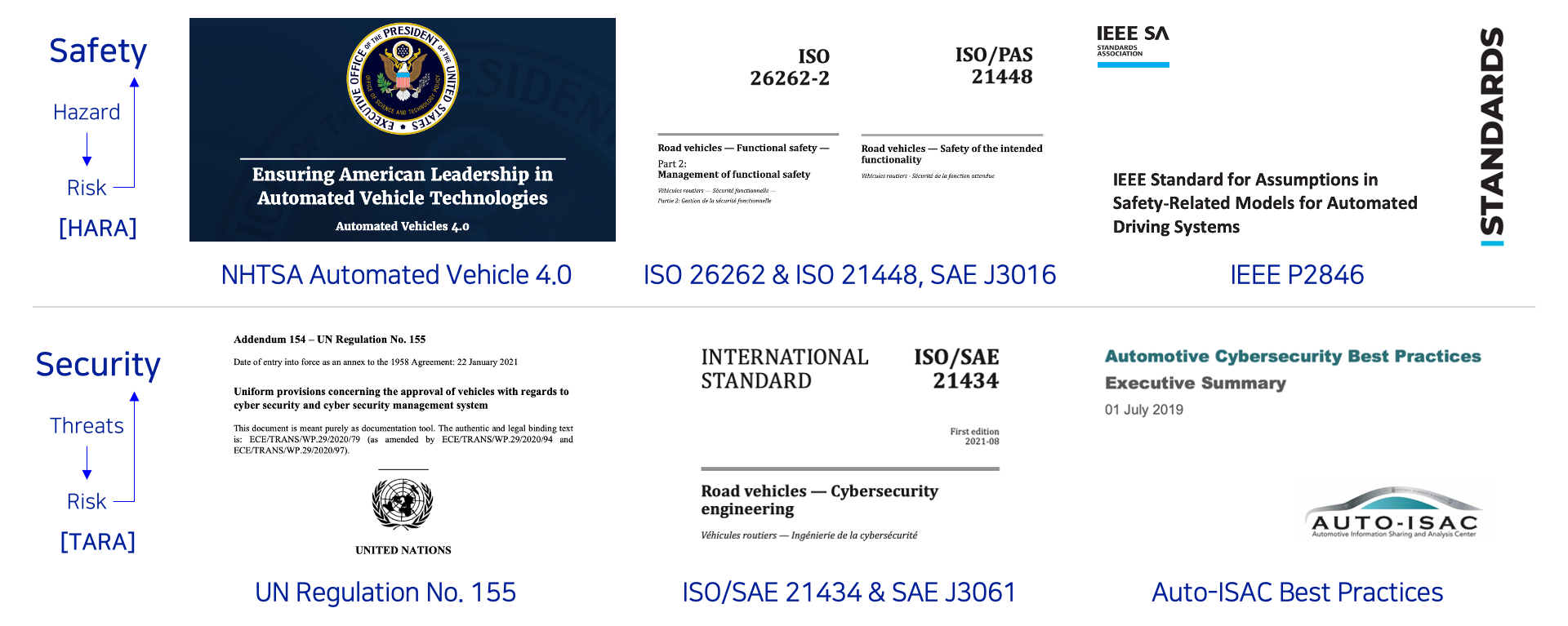
Laws and regulations for automobiles now require the reinforcement of security as well as safety, which reshapes how manufacturers build and certify vehicles.
IMCS Lab
Securing intelligent mobility — from regulation and risk assessment to in-vehicle intrusion detection and EV charging authentication.
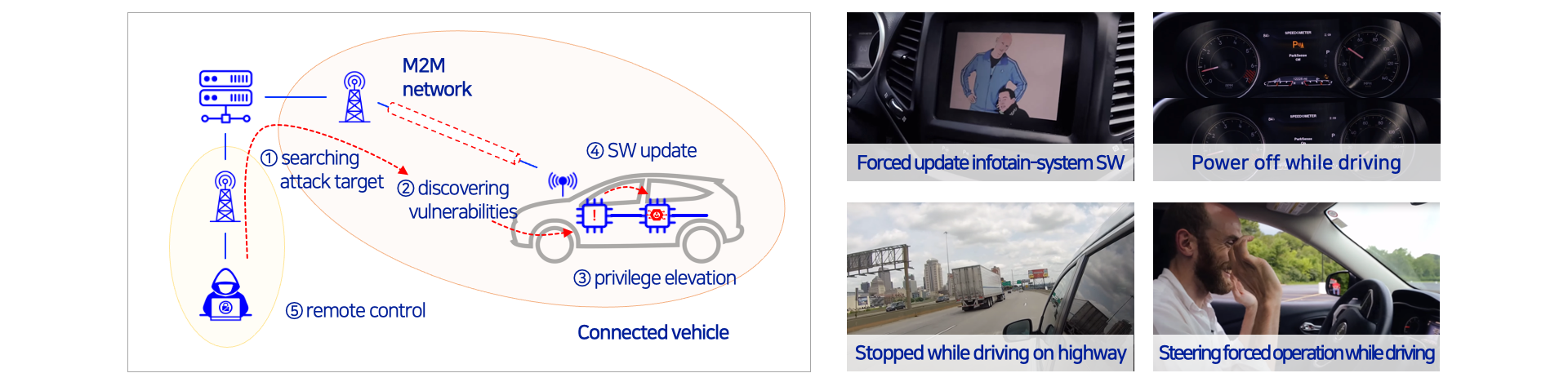
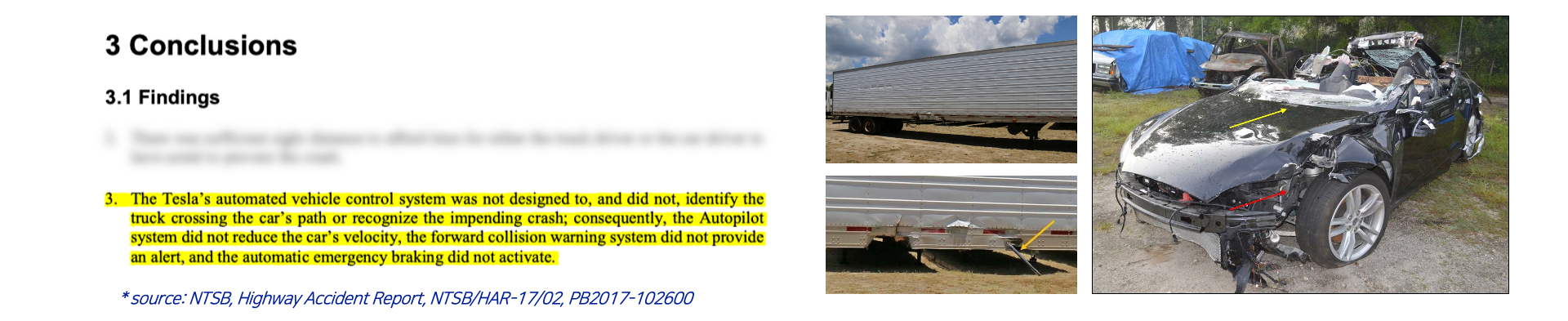
Connected-car hacking and fatal crashes in driving automation changed the automotive security paradigm: attacks arrive over wireless networks, target unspecified vehicles, reach safety functions directly, and place responsibility on manufacturers.
Laws and regulations for automobiles now require the reinforcement of security as well as safety, which reshapes how manufacturers build and certify vehicles.
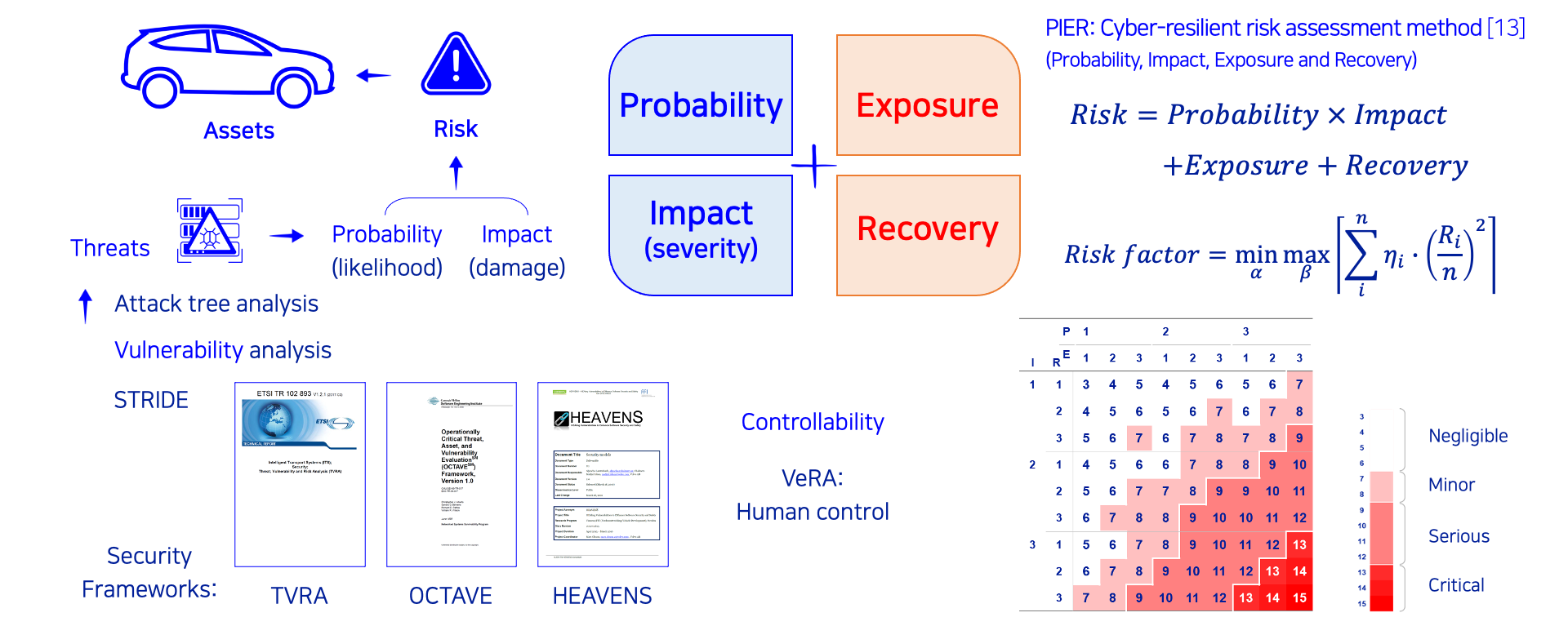
The PIER approach considers cyber-resilience: beyond the risk factors of probability and impact, it also covers exposure and recovery. See Projects for details.
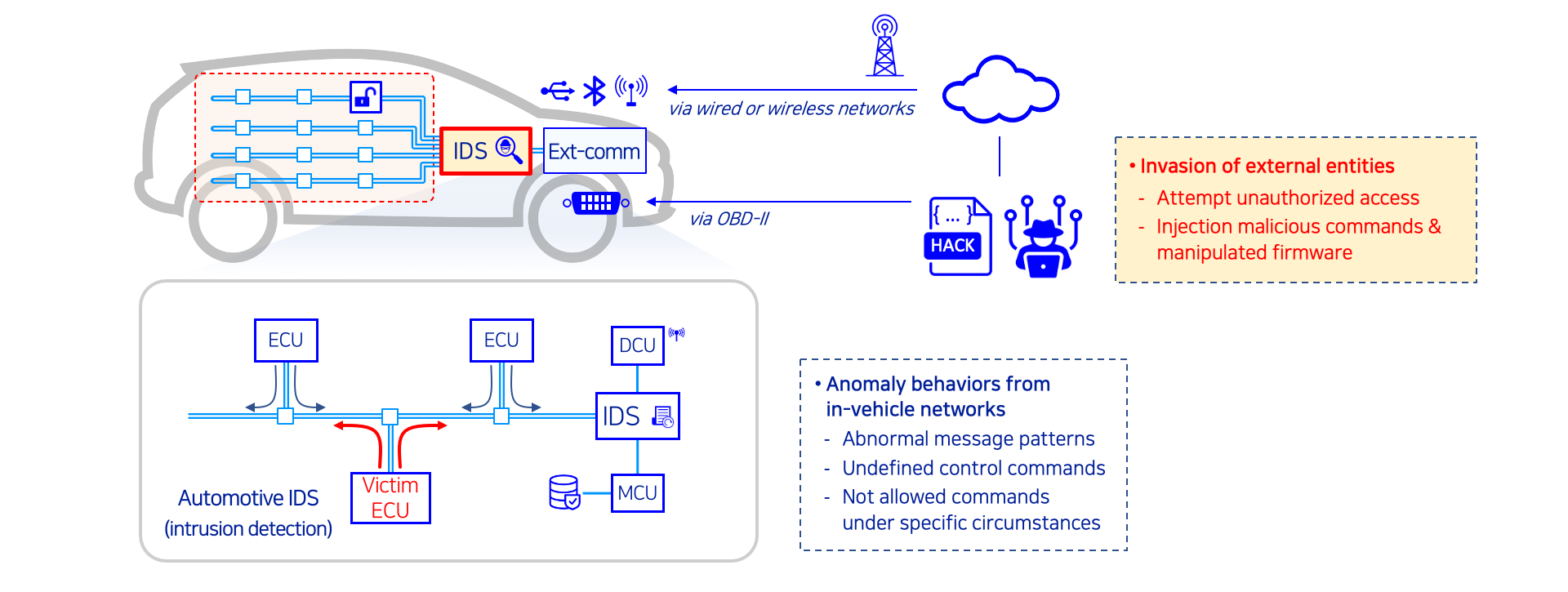
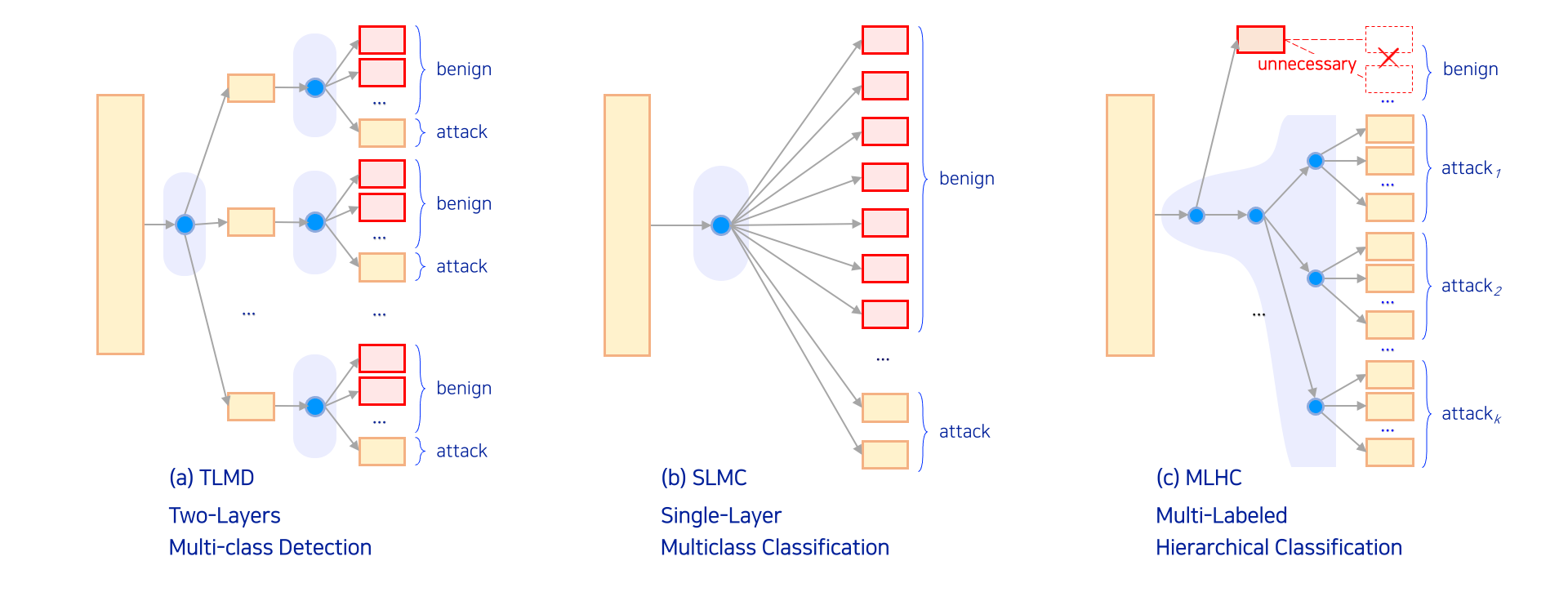
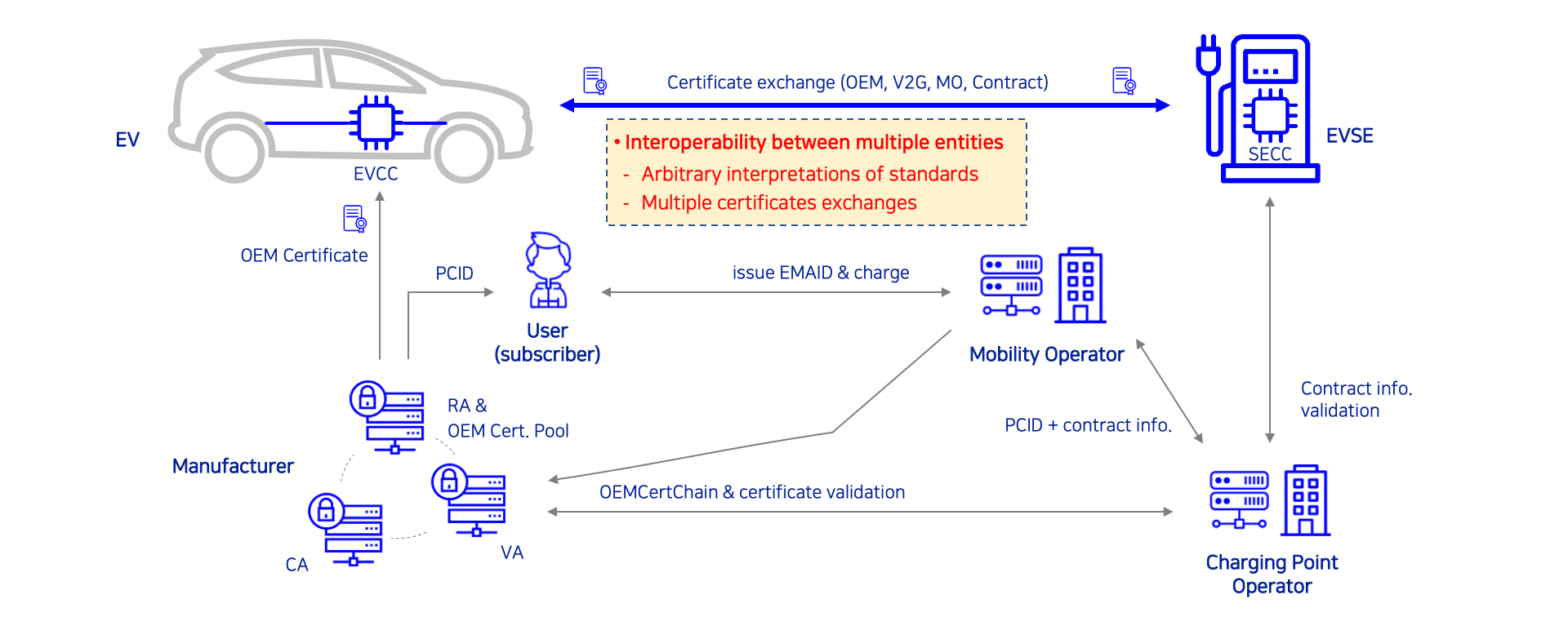
Authentication and automatic payment for electric vehicle charging, built on a public key infrastructure. See Projects for details.
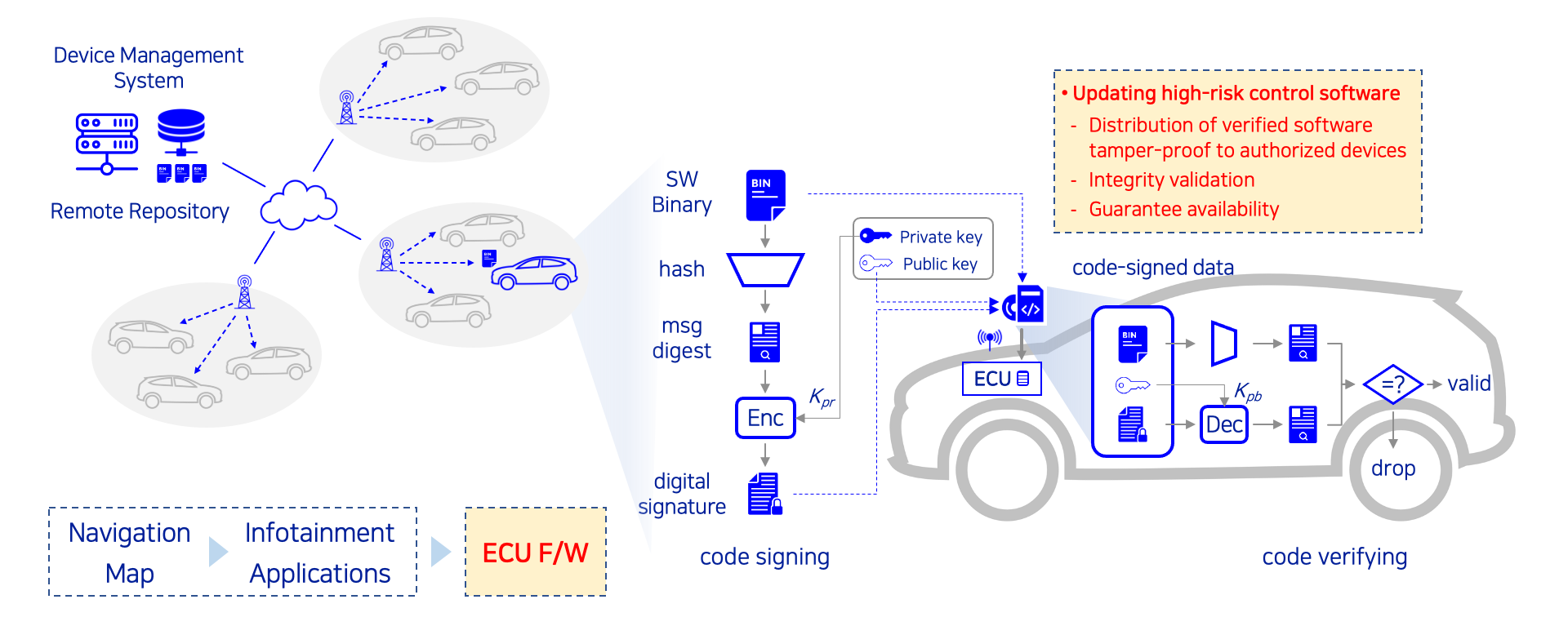
Integrity validation of ECU software to prevent manipulated code injection attacks.
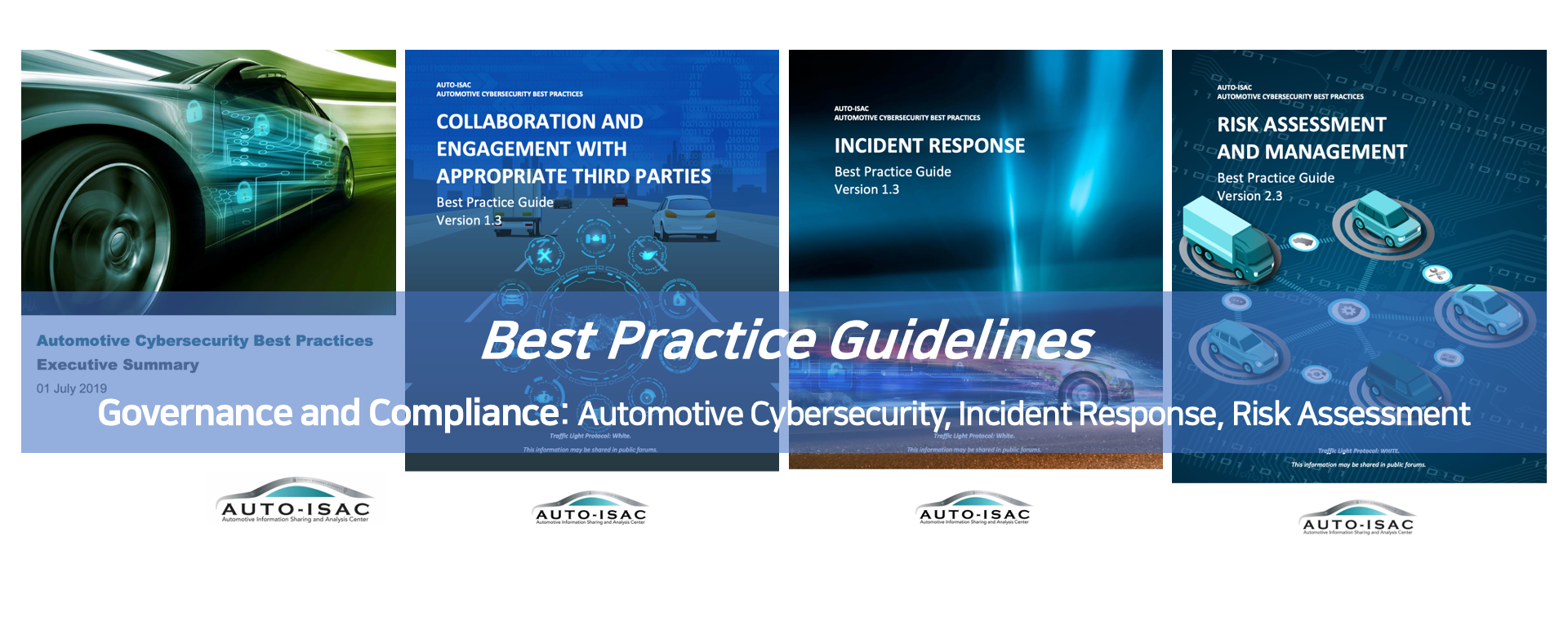
Enhancing cybersecurity and sharing information on cyber threats and vulnerabilities among automotive industry members and the US government since 2015. Auto-ISAC promotes collaboration and coordination among its members, such as vehicle manufacturers, suppliers and automotive cybersecurity professionals.
Recognizing moving objects from multiple sensing data fusion, including adaptive point cloud processing for perceptual quality.
Trajectory planning that predicts the movement and interference of moving objects for collision avoidance.
Automotive OTA update mechanisms aligned with UN R.156 and ISO 24089.